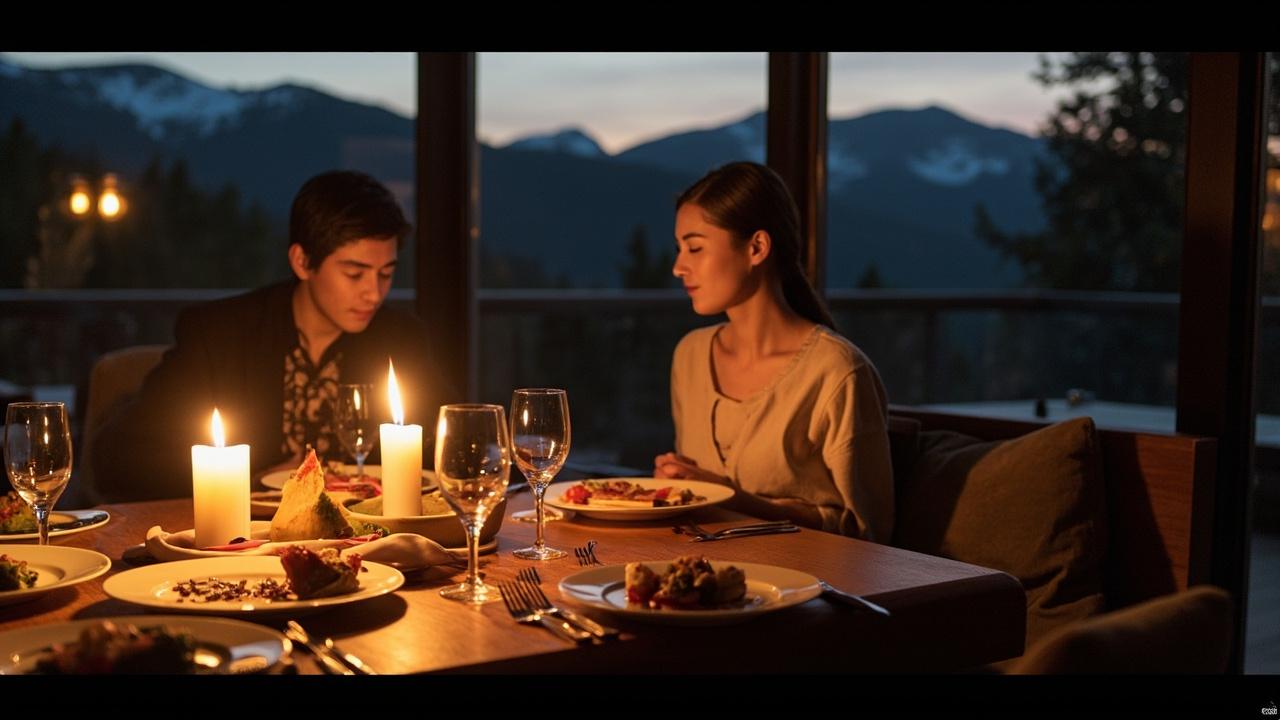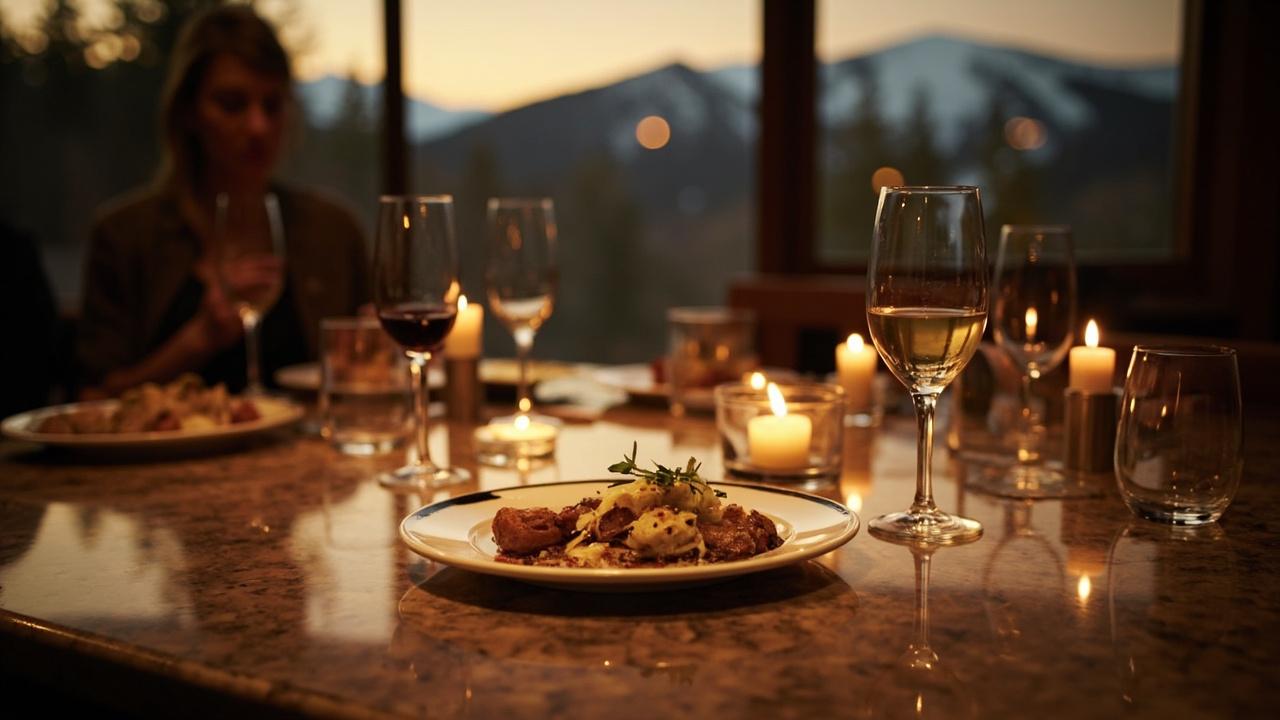
Featured image concept: "elegant tasting menu plated course on marble table, Aspen mountain view through window, wine pairing, luxury home dining." A close up of a beautifully plated small course, microgreens and sauce dots, with a wine glass in soft focus and a Colorado mountain sunset visible through the windows behind it. Warm, intimate lighting.
A tasting menu is a curated progression of small courses, usually five to twelve dishes, designed by the chef to tell a culinary story, and yes, you can absolutely have one at home in Colorado with a private chef who handles everything from shopping to plating to cleanup.
If you've ever sat through a tasting menu at a Michelin level restaurant, you know that mix of theater and precision. Each course builds on the last, and you're not thinking about anything except the next bite. The question most people don't ask is whether that same experience can happen in your own dining room, in Vail or Aspen or Denver, without the two month reservation or the prix fixe anxiety.
It can. And the real luxury isn't the foam or the wine pairing. It's sitting at your own table, glass in hand, actually present for the people you invited.
Why Do Home Tasting Menus So Often Fall Apart?
Home tasting menus fall apart because of what we call The Fine Dining Gap: most people assume this kind of dinner belongs only to restaurants with sommeliers and reservation systems, so they either skip the experience entirely or attempt a DIY version that collapses under its own logistics.
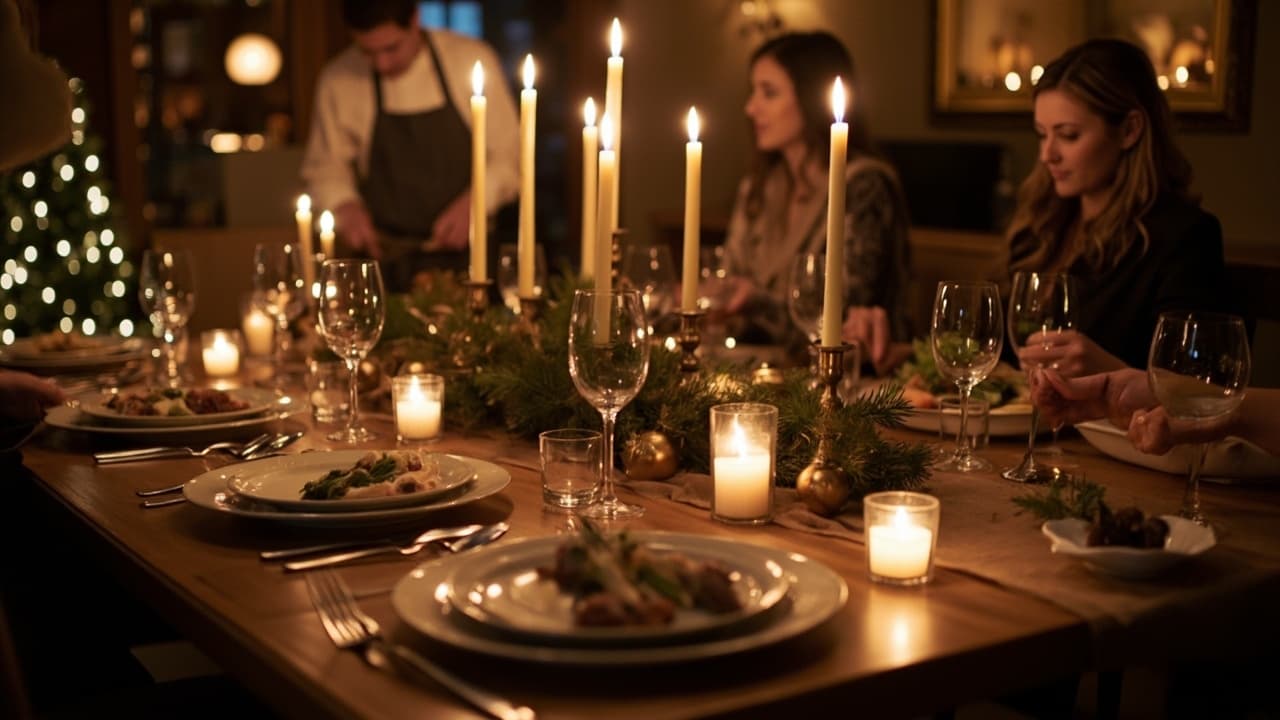
Picture it. Eight friends are gathered in a Breckenridge rental after a long day on the mountain. The host has decided tonight is the night for five courses. By the time the first plate goes out, they've been in the kitchen for three hours, and nobody has seen them sit down.
Three frictions do the damage.
The logistical friction. Tasting menus demand precise timing across multiple courses, often with techniques like sous vide, reductions, or delicate plating that need your full attention. Trying to execute that while hosting means you're either in the kitchen for three hours or serving cold food.
The sourcing and skill friction. A real tasting menu depends on seasonal ingredients, often specialty items like microgreens, edible flowers, or dry aged proteins that aren't sitting in a Whole Foods. Even if you track them down, the techniques are outside most home cooks' range. French sauces, foams, and precise temperatures are a craft of their own.
The presentation and flow friction. The magic of a tasting menu is pacing. Courses arrive when the previous bite is finished, wine pairings are timed, and plates are cleared silently. At home, you're managing all of that while trying to be present with your guests, and it quietly falls apart.
The Painful Reality: 🎭 You spend a fortune on ingredients you've never worked with, miss the entire dinner because you're reducing a beurre blanc, and serve course four while everyone is still talking about course two. You paid for theater and ended up stage managing.
What Makes a Tasting Menu Different from a Regular Dinner?
A tasting menu is the chef's edit: instead of choosing from a list of dishes, you follow a narrative the chef has built, usually five to twelve courses, each small and each intentional. It's about progression, contrast, and surprise.
Four elements define it:
- Small portions, big impact. Each course is two or three bites, enough to experience the flavor without filling you up before the next dish arrives.
- Seasonal and driven by technique. Chefs use what's at peak season and apply methods that showcase skill, like curing, smoking, fermentation, and precise temperature control.
- Wine or beverage pairings. Often each course comes with a matched glass, though some tasting menus offer a single pairing or none at all.
- A story or theme. The best tasting menus have a thread, whether it's regional ingredients, a particular cuisine, or a technique the chef is exploring.
The difference from a regular multi course dinner is simple. A tasting menu is curated by the chef, not chosen by the guest. You're trusting their vision.
How Can You Pull Off a Tasting Menu at Home Yourself?
You can pull one off at home by keeping it small, prepping early, and refusing to do every job yourself. If you still want to cook, these three strategies have real value.
1. Work backwards from your skill ceiling, not your ambition.
Pick techniques you've done successfully before and add one new element per course, not five. If you can sear a scallop well, build a course around that. If you've never made a consommé, don't debut it at a tasting menu.
The Result: You stay in control instead of troubleshooting mid service.
2. Do your mise en place the day before, then sequence by temperature.
Prep every component a day ahead: sauces, garnishes, and proteins portioned and seasoned. On the day, map out which courses are served cold, room temperature, or hot, and sequence them so you're not reheating and chilling at the same time.
The Result: You're plating, not cooking, during the actual dinner.
3. Limit the menu to five courses and get a friend to run the floor.
Five courses is enough to feel like a progression without the chaos of eight or ten. Recruit someone to clear plates, pour wine, and manage timing so you can focus on execution.
The Result: You're the chef, not the server and the dishwasher.
Can You Really Get Restaurant Quality Tasting Menus in a Vacation Rental?
Yes, you can. TheKitchenTable works with chefs across Denver, Vail, Breckenridge, Aspen, Steamboat Springs, and Telluride, many of whom trained in Michelin kitchens and now build tasting menus in private homes and vacation rentals every week.
In practice, it looks like this:
- The chef consults with you on dietary restrictions, preferences, and the story you want the menu to tell, whether that's Colorado terroir, Japanese techniques, or a classic French progression.
- They source everything, often the same day from local purveyors or specialty shops, and arrive with the ingredients and the plan.
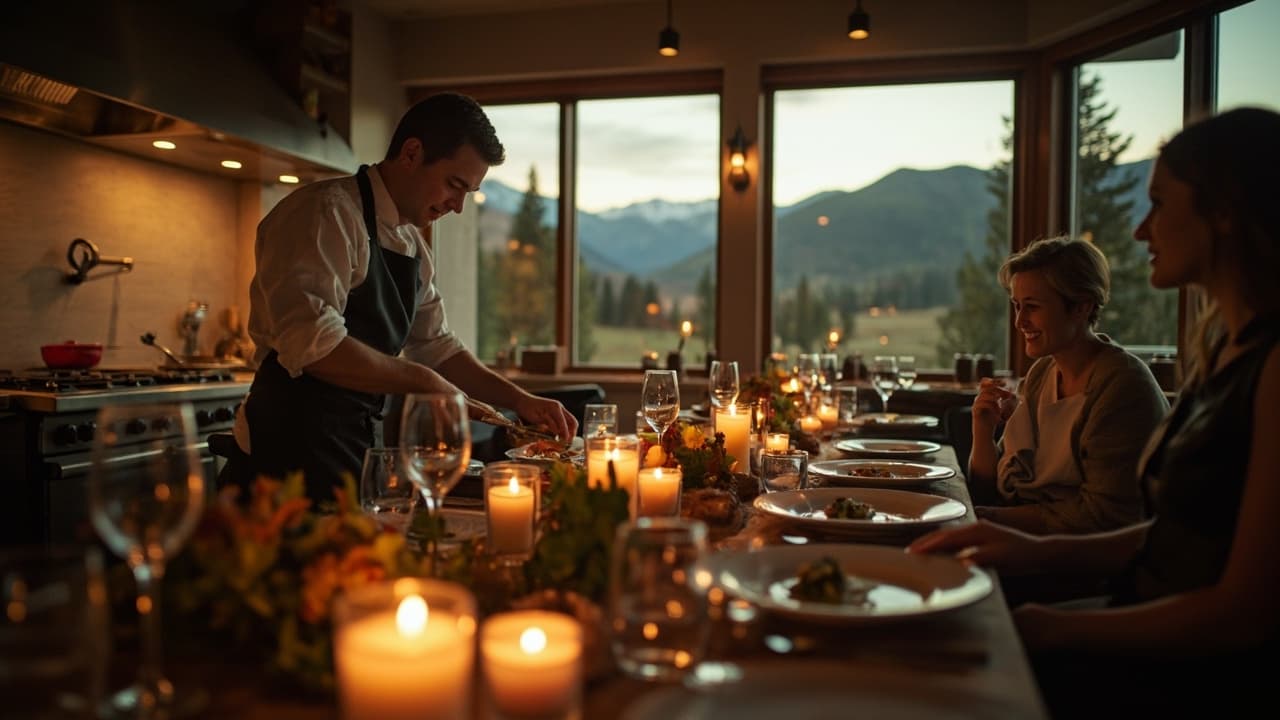
- Courses are plated in your kitchen and served at your table with timing controlled by the chef. You're a guest at your own dinner.
- After the final course, the kitchen is cleaned, the dishes are done, and the chef leaves. You're left with the memory, not the mess.
What does it cost? Tasting menus typically start around $75 per person and scale with the number of courses, the ingredients, and wine pairings. A ten course menu with premium proteins and rare wines will push toward $150 per person. You set the budget, and the chef builds within it.
Is a Private Tasting Menu Better Than Going Out?
Sometimes it is, and for three good reasons.
1. No two month waitlist, no noise, no table turn pressure.
Restaurants with serious tasting menus are booked months out, and even when you get in, you're on a schedule. At home, the dinner starts when you're ready and ends when you're done.
2. Full customization for dietary needs and preferences.
A restaurant tasting menu is fixed. At home, the chef tailors every course. If someone is gluten free, vegetarian, or allergic to shellfish, the menu adapts without compromise.
3. You're not driving home after six wine pairings.
Tasting menus and wine pairings are a natural combination, but in a restaurant that means either a rideshare or a designated driver. At home, you walk to the couch.
🍷 The tradeoff: Restaurants offer spectacle, the open kitchen, the choreography, the room. At home, you trade that for intimacy and control. It depends on what you value.
What If You Just Hire the Chef and Show Up?
If the idea of a tasting menu appeals but the execution doesn't, TheKitchenTable is how you get the experience without the friction. A vetted local chef does the work, and you do the part you actually wanted, which is enjoying the evening.
Three pillars make that possible:
- 🥂 Custom menus that adapt to every dietary restriction and preference. You tell the chef what you want or don't want, and they build a progression that works. Vegan, keto, allergies, kids, all of it gets integrated without a separate menu.
- Sourcing, cooking, and service handled by a vetted local chef. Your chef shops for the ingredients, cooks in your kitchen, plates each course, and paces the table. You never touch a reduction.
- A kitchen left cleaner than the chef found it. No sink of greasy pans, no pile of sauce pots, no cleanup at midnight. When the last course is done, the kitchen is done too.
The best tasting menu is the one where you're still laughing at the table when the dessert arrives. Plan yours at tkteats.com, or head straight to tkteats.com/guest to book a private chef for your next dinner in Colorado.