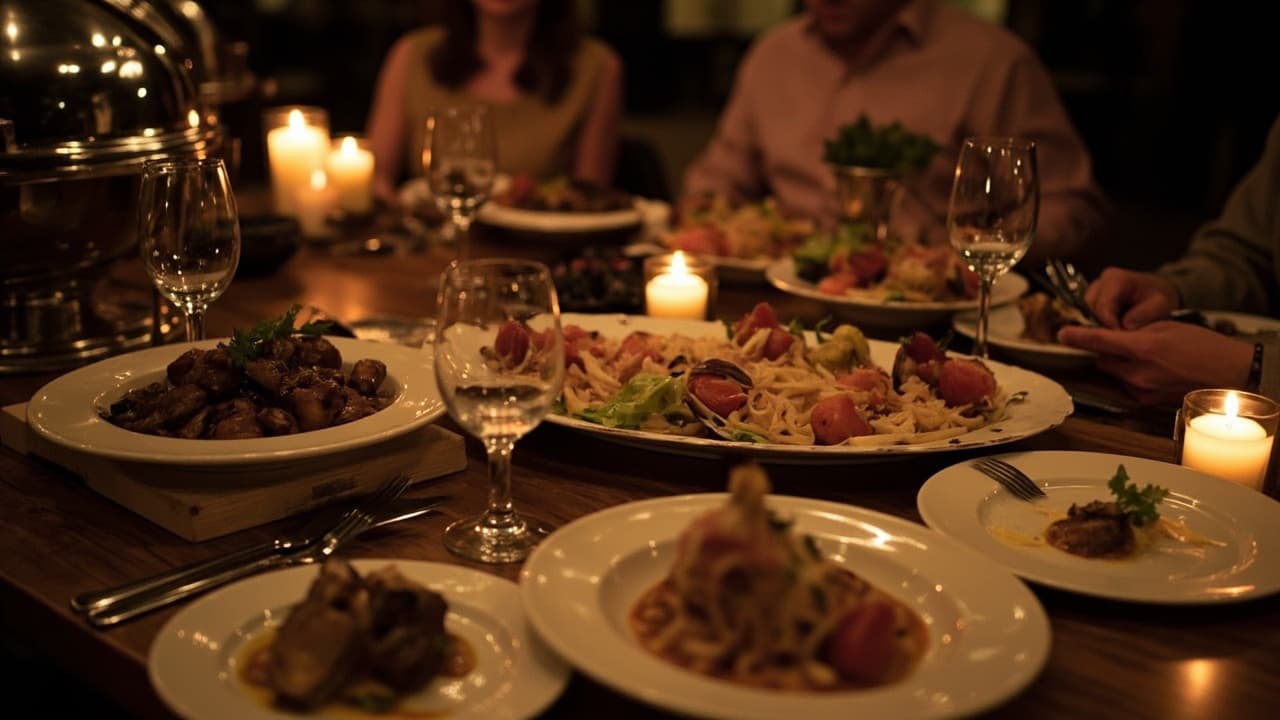
Buffet works for casual crowds over 40 guests, family style creates intimacy for 8 to 30 people, and plated service delivers formality and precision for seated dinners where timing and presentation matter most.
You've locked the venue, sent the invites, and now you're staring at the one question that quietly controls the entire evening: how does the food actually reach the plate? Most hosts treat serving style as a catering checkbox, then discover too late that the choice reshapes guest flow, kitchen load, and whether anyone talks to each other or stands in a line holding a warm plate.
And somewhere in the planning, hosting starts to feel like an unpaid restaurant shift. You are checking outlets, counting platters and watching the clock instead of watching your own party. The real luxury is being present at your own table, and the serving style you choose decides whether that is possible.
What Is the Service Style Blind Spot?
The Service Style Blind Spot is picking a format because you saw it at someone else's event, not because it suits your group, your space and your goals. It shows up in three collisions.
The logistical collision. Buffets need staging space, electrical outlets for chafing dishes, and a flow plan so 60 people don't bottleneck at the shrimp. Family style needs enough table real estate for platters plus plates. Plated demands precise kitchen timing and a clear path for servers to move without tripping over a bag or a dog.
The social collision. Buffets let people eat when they want, but conversation scatters across refill trips. Family style forces intimacy, which works beautifully for a close group and poorly when half the table are strangers. Plated locks everyone into the same rhythm. It is elegant when coordinated, and awkward when the kitchen falls behind and guests sit staring at their silverware.
The execution load. Buffet means constant monitoring, refilling and temperature management. Family style requires portioning and synchronized platter delivery. Plated is a timed performance. Every course needs to land hot and plated identically, and if someone has a dairy allergy, the kitchen needs to track exactly which plate is theirs.
The Painful Reality: 🔌 You spend $4,000 on ingredients and rentals, then realize your Airbnb kitchen has one outlet and no counter space for a buffet. Or your plated dinner for twelve turns into a choreographed ballet you are attempting with no chef and a toaster oven.
How Do You Choose the Right Serving Style for Your Event?
Choose by guest behavior, true cost and dietary needs, in that order. If you still want to run the evening yourself, these three strategies will save you from the worst surprises.
1. Match serving style to guest behavior, not aesthetic
The service format controls movement and conversation, not just presentation. The mistake is choosing what looks impressive in your head instead of what your group will actually do.
A buffet at a networking event keeps people mobile and mixing. The same buffet at an intimate anniversary dinner fractures the mood, because people keep standing up. Family style works when everyone knows each other, or when you want to force connection. Plated fits formal milestones, rehearsal dinners, or any event where the host wants to control pacing and eliminate self serve chaos.
Run this filter before you commit:
- Will guests want to move around and mingle, or stay seated and talk to their neighbors?
- Is this a celebration where presentation is theater, or a gathering where ease matters more than formality?
- Do you need flexibility for late arrivals and dietary variety, or precision where everyone eats the same course at the same moment?
The Result: Serving style becomes a strategic choice that supports the social dynamic you want, instead of a layout decision that accidentally undermines it.
2. Calculate real costs beyond the per person line
Serving style changes the hidden infrastructure, not just the menu price. Most quotes show buffet at $50 per person, family style at $50, and plated starting at $75. That spread makes buffet look cheaper, until you add the rentals.
Buffets require chafing dishes, fuel, serving utensils, staging tables and often a tent or extension if your space lacks a logical setup zone. Family style needs large platters and sometimes extra table surface. Plated requires more labor, tighter kitchen timing and potentially a second oven if you are serving a hot course to a group over twenty.
Then add the questions that never appear on a quote:
- Does your venue have the electrical capacity and layout to support a buffet?
- Does your table fit twelve people plus six serving platters, or will family style need a second table for the food?
- For plated, do you have enough matching plates, and a way to keep finished courses warm while the chef finishes the last three?
The Result: You price the whole system, not just the food, and you discover that the cheapest per person option can cost more once rentals, labor and spatial logistics are counted.
3. Plan for dietary restrictions and pacing control
The more formal the service, the more advance clarity you need on who eats what. Buffets handle dietary variety easily, because guests see everything and choose for themselves. The risk is running out of the vegetarian option while the standard proteins sit full.
Family style works if you put variety on each platter, but you lose portion control. The vegan guest may watch the dairy loaded side dish pass around the table with nothing left for them. Plated requires exact counts and labels, with each restriction documented in advance so the chef knows plate seven is free of dairy and plate twelve is free of gluten. If someone changes their mind on the night, the system breaks.
So decide how much flexibility your group needs. For a corporate dinner where half the room has allergies and preferences, buffet or family style gives you room to adapt. For a wedding where you collected RSVP cards with meal choices, plated works because everyone committed in advance. For anything in between, ask your chef how they handle modifications and whether your chosen format can absorb last minute changes without kitchen chaos.
The Result: Dietary restrictions get handled by format and planning, instead of being discovered mid meal when someone can't eat anything and the host scrambles to improvise.
Can a Private Chef Pick the Serving Style for Me?
Yes. A vetted private chef can recommend and execute the format that fits your group, your space and your goals, so you never have to guess. 🍽️ You can map all of this yourself, rent the equipment, coordinate the timing and hope your spatial guess was right. Or you brief a chef on the group size, the vibe and the venue layout, and they tell you what will actually work.
TheKitchenTable connects you with vetted chefs across Denver, Vail, Breckenridge, Aspen, Steamboat Springs and Telluride who have executed all three formats in Colorado homes, Airbnbs and event venues. The chef walks your kitchen or rental and confirms what the space can handle. They source ingredients locally and adjust the format to your real constraints, instead of forcing a service style that looked good on Pinterest but doesn't match your outlet count.
Here is what that looks like in practice:
- Buffet from $50 per person when the group is large and casual.
- Family style from $50 per person when you want shared plates and intimate energy.
- Plated from $75 to $150 per person when formality and synchronized courses matter.
Custom menus cover the dietary needs of your group. The chef handles setup, service and cleanup, and the kitchen is left cleaner than they found it. You set the budget and the vibe, and the format follows function.
Tell us your event details at tkteats.com/match-chef/details and a Colorado chef will recommend the serving style that fits your group, space and goals.